Roof Moss Removal vs Moss Treatment: What’s the Difference?
Roof moss removal physically clears moss from the roof. Moss treatment targets living growth and, depending on the product, may help slow its return. A roof with thick moss may benefit from both, provided the methods suit the roofing material and its condition.
Understanding roof moss removal vs moss treatment means recognising that clearing visible clumps and treating what remains are different jobs, and treatment does not always leave a roof looking clean straight away.
Roof Moss Removal vs Moss Treatment: What Actually Changes?
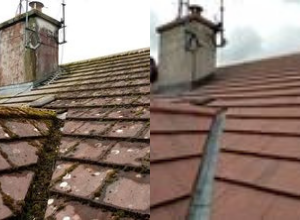
Removal changes how much moss is sitting on the roof; treatment acts on the growth itself. Physical clearing gives a more immediate visible change. Some treatments work gradually, with dead growth clearing over time.
| Consideration | Moss removal | Moss treatment |
| Main purpose | Physically clear moss and debris | Kill or control targeted growth |
| Removes visible moss | Clears the growth being removed | May leave dead moss in place initially |
| Works immediately | Visible clumps are cleared during the work | Results depend on the product; appearance may improve gradually |
| Targets remaining growth | Small patches may remain | Can target growth left after clearing |
| Helps with regrowth | Removal alone does not stop new growth | May slow regrowth; no permanent guarantee |
| Best suited for | Build-up that needs clearing, where the material allows | Suitable growth and surfaces, alone or after removal |
What Happens During Roof Moss Removal?
Roof moss removal involves carefully clearing built-up moss from the roof surface. Depending on the material and condition, this may include suitable hand tools or another agreed method. Loose growth and debris also need managing so they do not collect in gutters or valleys
A thick layer may need physical clearing because killing it does not immediately take it off the roof. However, that does not mean every tiled roof should be scraped.
Manufacturer advice matters. Marley warns that scraping can damage clay tiles and does not recommend pressure washing them.
What Does a Moss Treatment Do?
A roof moss treatment uses a suitable product to kill or control the growth it is designed for. A biocide is a treatment that acts on living organisms. Depending on the product, it may target moss, algae or lichen and help manage growth remaining after cleaning.
Moss treatment for roofs should be matched to the material and applied according to its instructions. Some products need time to work, and dead growth may remain visible before it clears.
Treatment is not a repair. It will not fix cracked tiles, loose ridge tiles or an existing leak.
Can Moss Treatment Get Rid of Moss That’s Already There?
Treatment can act on existing moss, but killing growth and physically removing it are different outcomes. The amount and thickness of moss, roof condition, product and weather all affect the result. A roof covered in clumps should not be expected to look clear immediately after treatment.
Some methods rely on gradual weathering to clear treated growth. Others may include separate clearing or rinsing, where suitable.
Should Moss Be Cleared Before a Roof Treatment?
Heavy build-up may need clearing before treatment, but the same order does not suit every roof. A professional should check the material, its condition and the treatment instructions first. Where suitable, removing bulky growth lets the follow-up treatment act on what remains rather than leaving thick clumps in place.
The practical question is what the roof needs, not whether every job must include both steps.
Which Option Makes Sense for Your Roof?
The better approach depends on the amount of moss and whether it is causing a problem. A few patches, a heavy covering and a fragile roof need different decisions. Removal, treatment, both or simply monitoring the growth may be appropriate after checking the roof.
Light Moss or Early Growth
Small amounts do not automatically need cleaning. Marley advises that low to moderate growth is normally not harmful to tiles or slates. If action is needed, a suitable treatment may be considered.
Heavy Moss Build-Up
Thick growth needs closer attention, especially where water flow is affected. Physical clearing may be useful if the roof material allows it. Gutters and valleys should also be checked.
Moss That Keeps Coming Back
Shade, nearby trees and damp areas can favour regrowth. A treatment may help manage it, but cleaning does not change the roof’s exposure to those conditions.
Older or More Delicate Roof
The condition of the tiles or slates comes first. Unsuitable scraping, foot traffic or high-pressure cleaning can cause damage. Loose or broken materials may need repair before cleaning is considered.
For more on methods, read softwashing vs pressure washing.
How Spooners Cleaning Deals With Roof Moss
Spooners Cleaning provides professional roof moss removal for residential and commercial properties in Ireland. Its published process describes checking roof material, age, pitch, moss build-up and access before choosing an approach.
The team also describes managing heavy loose growth where suitable, followed by controlled treatment. Its biocide roof-cleaning guide explains the treatment stage separately.
A useful roof moss cleaning quote should explain the proposed method, debris clearing and whether treatment is included.
How Quickly Will You See a Difference?
Physical clearing changes the roof’s appearance during the work, while treatment results may develop afterwards. How long that takes depends on the product, growth, roof and weather. There is no single number of days that applies to every roof moss treatment.
Spooners describes gradual improvement through natural weathering in its soft-wash roof-cleaning article. Ask what to expect for your particular job, including whether a follow-up check is planned.
Not Sure What Your Roof Needs?
You do not need to settle the roof moss removal vs moss treatment question yourself. For roof moss treatment in Ireland, start with a roof-specific check. Spooners Cleaning can check the amount of moss, roof condition and access, then discuss a suitable approach.
For homeowners considering roof moss treatment in Ireland, the useful starting point is the roof itself, rather than a promise that one method suits every home.
Not sure whether your roof needs moss removal, treatment or both? Ask Spooners Cleaning to check your roof and recommend a suitable approach.
Frequently Asked Questions
Will roof moss come back after it has been removed?
It can come back because clearing existing growth does not remove the conditions that allowed it to grow. Damp weather, shade and nearby trees can all play a part. A suitable treatment may help slow its return, but ongoing checks are more useful than expecting a permanently moss-free roof.
Can moss cause problems with roof tiles?
Heavy moss can affect water flow, but a small patch does not automatically mean damaged tiles. The concern is greater if growth interferes with drainage or loose material collects in gutters. Leaks or broken tiles need a roofing check; cleaning should not be treated as the repair.
Is it safe to remove roof moss yourself?
Climbing onto a roof to remove moss is not advisable. Falls from ladders, roof edges or fragile surfaces can cause serious injury, and unsuitable tools may damage tiles. Arrange professional help with safe access rather than trying to reach moss from a ladder or walk across the roof.
Does a roof look clean straight after moss treatment?
Not necessarily. A treatment-only visit may leave visible growth that changes and clears gradually. If roof moss cleaning includes physical removal, the clumps being cleared disappear during the work. Ask the contractor to explain which parts of the result will be immediate and which will take time.
What time of year is suitable for treating roof moss in Ireland?
Suitable weather matters more than a particular month. Application requirements vary by product, including any dry period needed afterwards. A contractor should check the forecast, access conditions and product instructions before proceeding. Irish rainfall does not make treatment impossible, but it can affect when the work should be booked.