Tarmac is built to cope with vehicles, foot traffic and changing weather, but that does not mean it stays clean or trouble-free. Dirt, traffic film, moss, algae, oil, tyre marks and general weathering can gradually change the appearance and condition of a tarmac surface.
Regular cleaning can make a significant difference, particularly in Ireland where damp conditions can encourage moss and algae growth. Proper maintenance also helps identify problems such as cracks, potholes and surface deterioration before they become more serious.
The important point is that cleaning is not simply a matter of using the strongest pressure washer available. The right approach depends on the age and condition of the surface, the type of contamination and the equipment being used.
This guide explains how tarmac cleaning works, whether pressure washing is suitable, how to deal with common stains and organic growth, and when cleaning is no longer enough.
What Is Tarmac and Why Does It Need Cleaning?
Tarmac is a bituminous surfacing material commonly used for driveways, roads, car parks, private lanes, access routes and other areas exposed to regular traffic. The terms tarmac and asphalt are often used interchangeably in everyday conversation.
A typical tarmac surface contains aggregate bound together with a bituminous binder. That surface is durable, but it can still deteriorate through age, weather exposure, traffic and inappropriate cleaning techniques.
Over time, outdoor surfaces can accumulate:
- Dirt and loose debris
- Traffic film
- Oil and fuel stains
- Tyre marks
- Moss and algae
- Weeds
- Leaves and organic material
- General grime
- Weather-related discolouration
Regular cleaning of tarmac surfaces helps remove this build-up before it becomes more difficult to treat. It can also improve appearance and reduce certain safety concerns associated with slippery organic growth.
Cleaning does not, however, repair structural damage. A clean driveway with extensive cracking or potholes still requires repair work.
What Causes Tarmac to Become Dirty or Stained?
Several factors can contribute to a dirty or stained tarmac driveway.
Moss and algae
Ireland’s wet and changeable weather provides favourable conditions for organic growth. Areas that remain shaded or damp for long periods can be particularly vulnerable.
Moss and algae are not just cosmetic problems. Wet organic growth can make a surface slippery, particularly around pedestrian areas, entrances and paths.
Rain and moisture
Rain helps wash some loose dirt away, but repeated exposure to moisture can also encourage algae, moss and other organic growth.
Poor drainage can make the problem worse. Areas where water remains on the surface for extended periods may require attention beyond simple cleaning.
Oil and fuel
Vehicle leaks are a common source of stubborn staining. Oil can penetrate the surface and become increasingly difficult to remove as time passes.
Fresh spills are generally easier to treat than old, deeply embedded stains.
Vehicle traffic and tyre marks
Regular traffic brings dirt, road residue and other contaminants onto the surface. Tyre marks can also become more noticeable on heavily used parking areas and driveways.
Leaves, weeds and organic debris
Leaves and other debris can hold moisture against the surface. Weeds may also establish themselves around edges, cracks or areas where dirt has accumulated.
How to Clean Tarmac
Effective tarmac cleaning normally involves more than simply pointing a pressure washer at the surface.
1. Inspect the surface
Start by looking at the condition of the tarmac. Check for cracks, loose aggregate, potholes, exposed areas, oil contamination and existing surface deterioration.
The condition of the surface should influence the cleaning method.
2. Remove loose debris
Leaves, stones, weeds and loose dirt should be cleared before washing begins. This makes subsequent cleaning more effective and prevents unnecessary debris from being moved around the area.
3. Apply pre-treatment
A suitable pre-treatment or cleaning solution can help loosen moss, algae, traffic film and other contamination.
Pre-treatment is particularly useful for reducing the amount of mechanical force required during cleaning.
4. Treat specific stains
Oil, grease and other stubborn contamination may require a suitable degreaser or specialist treatment. A general pressure wash may improve the appearance without completely removing deeply embedded stains.
5. Use controlled pressure washing
Tarmac pressure washing should be carried out with the surface condition in mind. Excessive pressure can cause surface scarring, disturb aggregate or contribute to binder erosion on vulnerable surfaces.
6. Rinse the surface
Once contamination has been loosened, the area should be rinsed thoroughly. Particular care is needed around drains and neighbouring surfaces so that contaminated water and debris are managed appropriately.
7. Allow the surface to dry
A proper drying period allows the condition of the cleaned surface to be assessed more accurately. It is also important if sealing or another protective treatment is being considered.
8. Consider sealing where appropriate
Some tarmac surfaces may benefit from sealing after cleaning. However, sealing is not automatically necessary and should depend on the condition and requirements of the surface.
Can You Pressure Wash Tarmac?
Yes, pressure washing can be used on tarmac, but the technique matters.
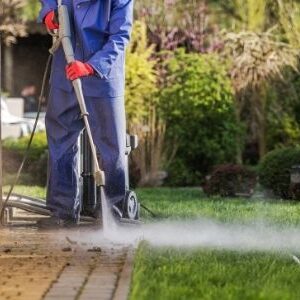
Tarmac pressure washing can be effective for removing dirt, grime, moss, algae, traffic film and some staining. Professional cleaning equipment can also provide more consistent results across larger surfaces.
The mistake is assuming that maximum pressure produces the best result.
Older or deteriorated tarmac may be more vulnerable to damage. Excessive pressure can potentially disturb the aggregate, mark the surface or contribute to erosion of the binder.
The correct pressure, nozzle, distance, water flow and cleaning technique should therefore be selected according to the surface.
Spooner’s Cleaning’s existing guidance similarly emphasises controlled pressure and surface-specific methods rather than treating every exterior material in the same way.
How to Remove Moss and Algae from Tarmac
Moss and algae are particularly common on shaded or damp tarmac surfaces.
Removing visible growth is an important first step, but simply washing the surface does not necessarily prevent regrowth. Spores and organic residue may remain, particularly in areas that stay damp.
A more effective process can involve:
- Removing heavy visible growth.
- Applying an appropriate pre-treatment.
- Allowing the treatment to work for the recommended period.
- Using controlled cleaning to remove loosened contamination.
- Rinsing the surface thoroughly.
- Improving drainage or reducing persistent moisture where possible.
Tarmac pressure washing can remove established growth, but the pressure should be controlled to avoid unnecessary surface damage.
Regular tarmac maintenance is particularly useful in shaded areas where moss and algae return quickly.
How to Remove Oil Stains from Tarmac
Oil stains can be among the most difficult forms of contamination to remove.
Fresh spills should be dealt with as soon as possible. Allowing oil or fuel to sit on the surface gives it more opportunity to penetrate the material.
A suitable degreaser or specialist cleaning solution may be applied before mechanical cleaning. Heated water can also help break down greasy contamination, reducing the amount of force needed.
Even with professional treatment, complete removal is not guaranteed for every stain. Old oil that has penetrated deeply into the surface may leave some discolouration behind.
The aim should therefore be realistic improvement rather than promising that every stain will disappear completely. For larger or heavily contaminated areas, professional commercial and public walkway cleaning may be appropriate.
How Often Should Tarmac Be Cleaned?
There is no universal cleaning interval that applies to every driveway or commercial site.
The appropriate frequency depends on:
- Traffic levels
- Surface location
- Shade
- Moisture
- Drainage
- Moss and algae growth
- Oil contamination
- Weather exposure
- Existing surface condition
A lightly used residential driveway may only require occasional deep cleaning alongside routine maintenance. If moss, algae, staining or built-up grime has become difficult to manage, residential tarmac cleaning can provide a more thorough solution.
Commercial properties may benefit from a planned tarmac maintenance programme, particularly where appearance, pedestrian safety and high traffic are important considerations. Commercial tarmac cleaning can help manage accumulated traffic film, oil contamination, moss, algae and other heavy soiling across car parks, forecourts and access roads. .
Tarmac Maintenance: How to Keep It Looking Better for Longer
Good tarmac maintenance does not have to mean frequent deep cleaning.
Simple steps can reduce contamination and make future cleaning easier:
Remove leaves and debris
Regularly sweeping away leaves and organic debris reduces the amount of moisture held against the surface.
Deal with weeds
Weeds should not be allowed to establish themselves in cracks, edges or damaged areas. Persistent weed growth can indicate that the surface needs repair rather than simply cleaning.
Address oil spills quickly
Fresh oil contamination is generally easier to deal with than old stains. Prompt action can reduce the likelihood of permanent discolouration.
Monitor moss and algae
Do not wait until organic growth covers large sections of the surface. Early treatment can make cleaning more manageable.
Keep drainage areas clear
Blocked drains or channels can leave areas persistently wet. Keeping drainage points clear is an important part of tarmac maintenance.
Arrange periodic professional cleaning
Large areas, heavy contamination and commercial surfaces can benefit from scheduled cleaning rather than waiting until the surface becomes heavily soiled.
Consider sealing
A suitable sealant may help protect and improve the appearance of some tarmac surfaces, although suitability should be assessed before application.
Does Tarmac Need to Be Sealed After Cleaning?
Not necessarily.
Sealing can be used to improve appearance, restore colour and provide an additional layer of protection, depending on the product and surface.
A properly prepared surface is important. Dirt, moisture and organic contamination should not simply be trapped beneath a new coating.
Sealing can form part of a wider tarmac maintenance strategy, but it should not be viewed as a replacement for cleaning or repair.
A badly deteriorated surface will not become structurally sound simply because it has been sealed. Cracking, potholes, loose aggregate and significant surface deterioration may require repair or resurfacing.
When Does Tarmac Need Cleaning, Repair or Resurfacing?
Knowing the difference between these three stages can prevent unnecessary work.
Cleaning problems
Cleaning is generally appropriate for issues such as:
- Dirt
- Moss
- Algae
- Traffic film
- Surface staining
- General grime
These problems affect appearance and, in some cases, surface safety, but they do not necessarily mean the tarmac itself has failed.
Repair problems
Repair may be needed where there are:
- Cracks
- Potholes
- Loose aggregate
- Edge damage
- Localised deterioration
- Areas where the surface has started breaking apart
Cleaning may make these defects more visible, but it cannot correct them.
Resurfacing problems
Extensive deterioration, widespread cracking or significant failure of the existing surface may indicate that resurfacing or replacement needs to be considered.
A useful rule is simple: cleaning addresses contamination, while repair and resurfacing address the physical condition of the surface.
Residential vs Commercial Tarmac Cleaning
The basic principles of cleaning are similar, but the scale, level of contamination and practical requirements can be very different between residential and commercial surfaces.
Residential Tarmac Cleaning
Residential tarmac cleaning commonly involves:
- Driveways
- Private lanes
- House parking areas
- Side paths
- Small access roads
Homeowners are often primarily concerned with appearance, moss, algae, staining and general surface condition. For surfaces affected by heavy moss, staining or built-up grime, residential tarmac cleaning can provide a more thorough solution than routine maintenance.
Commercial Tarmac Cleaning
Commercial tarmac cleaning can involve:
- Car parks
- Forecourts
- Access roads
- Loading areas
- Service yards
- Industrial estates
- Retail areas
- Business entrances
Larger sites may experience higher traffic levels and greater amounts of dirt, oil, traffic film and organic growth. Cleaning may also need to be scheduled around business operations.
For these environments, commercial tarmac cleaning can form part of a planned tarmac maintenance programme, helping to manage heavy build-up and maintain a cleaner, more presentable surface across the site. Spooner’s commercial service covers areas including car parks, forecourts, access routes, loading bays and service yards.
DIY Tarmac Cleaning vs Professional Cleaning
Small amounts of loose dirt or debris can usually be handled by a property owner using basic equipment.
The situation becomes more challenging with heavy moss, deep staining, large areas or older tarmac.
Domestic pressure washers may not have the same water flow, cleaning attachments or hot water capability as commercial equipment. Technique also matters. Poorly controlled cleaning can leave streaks or cause surface damage.
Professional cleaning may be particularly useful for:
- Heavy moss and algae
- Oil contamination
- Large driveways
- Commercial car parks
- Deep staining
- Delicate or deteriorated surfaces
The objective should not simply be to use more powerful equipment. Effective tarmac cleaning means matching the equipment, treatment and pressure to the surface.
Spooner’s Cleaning operates from Roscrea, Co. Tipperary and provides residential, commercial and industrial cleaning services across areas including Tipperary, Laois, Offaly, Kildare, Dublin and Limerick. The company also uses heated water burners and places emphasis on health and safety.
Need Professional Tarmac Cleaning?
If your tarmac is marked by oil and fuel spills, chewing gum, moss, algae, tyre marks or heavy traffic grime, professional cleaning can restore a cleaner, more presentable surface.
Spooner’s Cleaning uses heated water burners and high-pressure cleaning to tackle stubborn contamination. The heat helps loosen and break down difficult deposits before they are washed away, making it particularly effective for:
- Chewing gum: Hot water helps soften stubborn gum so it can be removed more effectively.
- Oil and fuel spills: Heat helps emulsify greasy contamination, making oil and fuel residues easier to break down and remove.
- Moss and algae: Heated water helps loosen organic growth from the tarmac surface.
- Tyre marks and traffic film: The combination of heat and pressure helps lift rubber deposits and accumulated road grime.
Where necessary, targeted pre-treatment can be used for particularly stubborn stains before the main cleaning process.
For businesses dealing with heavily soiled car parks, forecourts, access roads or other commercial surfaces, professional tarmac cleaning provides a more thorough solution than routine sweeping or standard washing.
Need your tarmac cleaned? Contact Spooner’s Cleaning to discuss your commercial tarmac cleaning requirements.
Common Tarmac Cleaning Mistakes to Avoid
Using excessive pressure
More pressure does not automatically mean a cleaner surface. Excessive force can damage vulnerable tarmac.
Using unsuitable chemicals
Cleaning products should be appropriate for the surface. Incorrect chemicals can cause staining or other unwanted effects.
Ignoring oil spills
Leaving oil contamination untreated allows stains to become harder to remove.
Leaving moss untreated
Heavy organic growth can create slippery conditions and become more difficult to manage.
Cleaning without considering drainage
Contaminated water and loosened debris need to be managed properly, particularly around drainage points.
Focusing only on appearance
A clean-looking surface can still have cracks, potholes or other defects. Cleaning should be accompanied by regular visual inspections.
Assuming cleaning will fix damaged tarmac
Cleaning removes contamination. It does not rebuild damaged areas or repair structural defects.
Neglecting regular maintenance
Allowing dirt, moss, algae and stains to accumulate for years can make the eventual cleaning process more difficult and intensive.
10. FAQ Section
Can you pressure wash tarmac?
Yes. Tarmac can be pressure washed, but the pressure and technique should be appropriate for the condition of the surface. Excessive pressure can potentially cause scarring, aggregate displacement or surface deterioration. Learn more about the difference between pressure washing and power washing and how the right cleaning method can affect different surfaces.
How often should tarmac be cleaned?
There is no universal schedule. Cleaning frequency depends on traffic, shade, moisture, moss and algae growth, staining, weather exposure and the condition of the tarmac.
How do you remove moss from tarmac?
Heavy moss should first be loosened or removed, followed by an appropriate pre-treatment and controlled cleaning. Addressing persistent moisture and shade can also help reduce future growth.
How do you remove oil stains from tarmac?
Oil stains may require a specialist degreaser or targeted cleaning solution before pressure or hot water cleaning. Fresh stains are generally easier to treat than old, deeply embedded contamination.
Does pressure washing damage tarmac?
It can if carried out incorrectly. Excessive pressure or unsuitable cleaning techniques may damage vulnerable, aged or deteriorated surfaces. The correct pressure and method depend on the condition of the tarmac.
Should tarmac be sealed after cleaning?
Not every tarmac surface needs sealing. Where appropriate, sealing can improve colour, appearance and protection, but the surface should be clean and sufficiently dry before application.
Can dirty tarmac be restored?
Cleaning can significantly improve the appearance of tarmac affected by dirt, moss, algae, traffic film and staining. It cannot, however, repair potholes, major cracks or structural deterioration.
How long does professional tarmac cleaning take?
The time required depends on the size of the area, contamination level, equipment used and surface condition. A small residential driveway may be completed relatively quickly, while large commercial sites require more planning.
Is tarmac cleaning suitable for commercial car parks?
Yes. Commercial tarmac cleaning is suitable for car parks, forecourts, access roads, loading areas and service yards. High-traffic surfaces may benefit from planned maintenance rather than occasional reactive cleaning.
Can professional cleaning extend the life of tarmac?
Regular cleaning can help protect the surface from persistent contamination and organic growth, while also making deterioration easier to identify. It should be considered part of overall maintenance rather than a replacement for necessary repairs.
Conclusion
Tarmac cleaning is an important part of maintaining driveways, car parks, access roads and other outdoor surfaces, particularly in Ireland’s damp and changeable climate.
The most effective approach is not simply to use the highest pressure possible. Surface condition, contamination type, cleaning products, water temperature and equipment all influence the result.
Regular cleaning can remove dirt, moss, algae, traffic film and staining while helping property owners identify deterioration before it becomes more serious. Good tarmac maintenance also includes clearing debris, addressing oil spills, monitoring drainage and dealing with organic growth before it becomes extensive.
For larger surfaces or difficult contamination, professional cleaning can provide access to specialist equipment, controlled techniques and targeted treatments. Spooner’s Cleaning provides residential and commercial tarmac cleaning as part of its wider exterior cleaning services.
The key distinction is worth remembering: cleaning improves the condition and appearance of the surface, but it cannot replace repair or resurfacing where the tarmac itself has deteriorated.