Moss on tarmac often appears along damp edges, beneath trees and in shaded corners. These patches can become slippery when wet, making autumn a useful time to check your driveway before winter.
Understanding how to remove moss from tarmac starts with the surface itself. Check for damage, carefully clear loose growth where the driveway can tolerate it, and consider a verified tarmac-compatible treatment only where needed. Clearing leaves and addressing persistent moisture can help reduce regrowth.
Check the Tarmac Before Starting
Walk around the driveway and look for:
- Loose stones, known as aggregate, or a crumbling surface.
- Cracks, potholes and damaged edges.
- Standing water or blocked drainage channels.
- Thick moss that could conceal defects.
- Nearby lawns, plants, drains and watercourses that could be affected by treatment.
Moss does not automatically explain existing damage. Age, wear and drainage problems may need separate attention, and cleaning will not repair them.
Moss usually forms leafy tufts or cushions. A thin green film may be algae, while flat, crust-like patches may be lichen.
If the surface is breaking apart, get it assessed before brushing or washing it.
How to Remove Moss from Tarmac Step by Step
1. Assess the Area and Weather
Decide whether this is a small patch on sound tarmac or a larger problem needing advice. Check the forecast and plan access so people and vehicles can avoid the working area.
Bring a non-metal broom, dustpan, collection bags and suitable gloves. Any chemical treatment may require additional protective equipment specified on its label.
2. Clear Leaves and Loose Debris
Sweep up fallen leaves, twigs and loose dirt. Collect them rather than pushing them into drains or onto neighbouring property.
3. Gently Remove Loose Moss
On sound tarmac, try light brushing with a non-metal broom in a small area first. Use only enough force to lift growth that releases easily.
Stop if stones come away or the surface starts breaking up. Avoid metal brushes, sharp scrapers and forceful digging. Firmly attached moss is a reason to reconsider the method, not scrub harder.
If a treatment is planned, check its preparation instructions before removing more growth. Some products have specific requirements about what should remain in place for application.
4. Decide Whether Treatment Is Needed
Small patches may be manageable through careful removal and improved maintenance. Chemical treatment is not automatically necessary for every driveway.
If growth remains, check that a proposed moss treatment for tarmac is suitable for the material, the growth present and home use.
5. Follow the Application and Waiting Instructions
Read the full label before opening or mixing the product. Follow its application method, dilution, coverage, weather restrictions and waiting period exactly.
Use the specified protective equipment and keep people and pets away for the instructed period. Prevent spray drift and follow restrictions around plants, drains and water. If those requirements cannot be met, do not apply it.
6. Collect Debris or Rinse Only as Directed
Treating growth and physically removing it are different tasks. A change in colour does not mean the driveway is clear or ready for use.
Follow the product’s instructions about leaving it in place, later brushing or rinsing. Do not automatically wash a leave-on treatment away. Collect loosened material and follow label directions for waste, leftover solution and equipment cleaning.
7. Check the Surface Afterwards
Once access is permitted, inspect the cleared areas for previously hidden defects. Check that debris has not collected over drainage openings.
Persistent puddles or newly exposed damage may need a drainage or surfacing contractor. Avoid further cleaning until you understand the problem.
Choose a Moss Killer That Is Suitable for Tarmac
A moss killer for driveways is not necessarily suitable for every driveway material. Before buying, check:
- Explicit compatibility with tarmac or asphalt, including any existing coating.
- Whether its stated use covers the growth you want to treat.
- Its current Irish approval status where required.
- Whether it is intended for amateur or professional use.
- Application, weather, access and rinsing instructions.
- Restrictions around vegetation, pets, drains and water.
Do not improvise with bleach, salt, vinegar, washing powder or homemade mixtures. Some solvents and cleaning agents can soften asphalt, as explained in Pallot Tarmac’s asphalt-care guidance. Compatibility matters more than a strong cleaning claim.
Pick the Right Time Before Winter
Suitable conditions matter more than finishing before a particular date. Irish autumn weather can interrupt outdoor work, so check the forecast against the exact product requirements.
Allow its specified rain-free window and observe surface-moisture and temperature limits. Do not assume a treatment can go onto wet tarmac. Avoid work on frozen or icy surfaces and postpone washing if water could freeze on access routes.
Choose a time when the driveway can remain out of use as instructed. Clear fresh leaf fall afterwards, but do not disturb treatment before its waiting period ends. One autumn application cannot guarantee a moss-free winter.
Can Pressure Washing Damage Moss-Covered Tarmac?
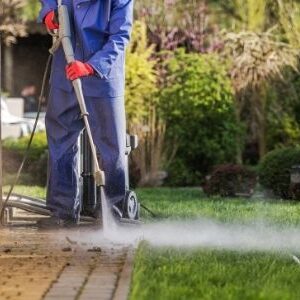
Unsuitable pressure or technique can dislodge aggregate and mark a vulnerable surface. Older, loose or damaged areas need particular caution.
Pressure washing can form part of professional tarmac cleaning, but it should not be the default DIY response to stubborn moss. Our guide to common driveway pressure-washing mistakes explains why surface-specific methods matter.
Reduce the Conditions That Encourage Moss to Return
Tarmac moss removal is only part of managing recurring growth. Afterwards:
- Sweep away leaves and organic debris.
- Keep accessible drainage channels and grates clear.
- Arrange assessment of persistent standing water.
- Reduce excessive shade through appropriate pruning where practical.
- Monitor damp edges and organise repairs for surface defects.
Moss can return if favourable conditions remain. Repeat chemical treatment only as permitted by the label, rather than following a fixed calendar routine.
For broader advice on how to clean a tarmac driveway, see our complete tarmac cleaning and maintenance guide.
Get Help With Extensive Growth or Damaged Tarmac
DIY work may be unsuitable where moss is widespread or firmly attached, the surface crumbles, or runoff is difficult to control. Uncertain product compatibility also calls for advice. Drainage and structural defects may require a separate contractor.
Spooners Cleaning provides residential tarmac driveway cleaning, including moss and algae removal, with an initial surface assessment to guide the approach.
Frequently Asked Questions
Will Dead Moss Disappear from a Driveway on Its Own?
Not necessarily. Some treatments rely on weathering, but debris may remain. Follow the instructions for any later removal and do not assume a colour change means the surface is no longer slippery.
Can I Treat Moss if Rain Is Forecast?
Only if conditions meet the product’s instructions. Postpone application if rain is expected within its required rain-free period.
Is the Same Moss Treatment Suitable for Tarmac and Block Paving?
Possibly, but check explicit compatibility with both materials. Instructions suitable for paving should not automatically be transferred to tarmac.
Why Does Moss Keep Returning Along the Edges of My Driveway?
Edges may remain shaded, collect debris or stay damp beside planting. Address those conditions and check drainage rather than relying only on repeated treatment.
Prepare Your Driveway With Care
Knowing how to remove moss from tarmac means matching the method to the surface, following any treatment instructions and addressing damp conditions. For advice or a quotation, contact Spooners Cleaning to discuss your driveway.