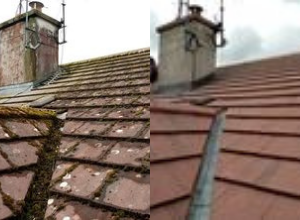
Autumn leaves, twigs and moss washed from roof tiles can collect in gutters and obstruct downpipes. Wet debris can form a heavy layer that prevents rainwater reaching the outlet.
Cleaning gutters involves checking access, choosing a safe method, removing debris, clearing outlets and confirming that water drains correctly. Start from the ground wherever practical. Some properties need professional equipment because of their height, layout or restricted access.
Before Cleaning Gutters, Check Whether the Job Is Safe
Walk around your home before taking out any equipment. Check:
- Weather and visibility: postpone work during rain, strong winds, frost or poor light.
- Ground and access: look for firm, level footing and enough space to operate equipment.
- Obstructions: identify overhead cables, branches, narrow passages and conservatories. Do not raise poles or ladders where they could approach electricity lines.
- Condition: look for cracked gutters, loose brackets and damaged surfaces that make access unsafe.
- Protection: wear sturdy gloves, eye protection and footwear with a good grip.
- People nearby: keep children, pets and passers-by away from falling debris and equipment.
The Health and Safety Authority’s work-at-height guidance prioritises avoiding work at height where possible. It concerns workplace safety, rather than setting out legal duties for DIY homeowners, but provides useful principles for planning the job.
A ladder requires suitable equipment, secure positioning and a sound supporting surface. Never rest it against guttering or glass. Follow the manufacturer’s instructions and maintain three points of contact. Having somebody hold a ladder does not make an unsuitable setup safe.
Read the HSA’s Using Ladders Safely information sheet before considering elevated access. If you cannot maintain a secure handhold, reach comfortably or secure the equipment properly, arrange professional cleaning.
Choose the Right Tools for the Job
Suitable gutter cleaning tools depend on gutter height, the available space, debris condition and how clearly you can see the work.
| Tool | Purpose | Important limitation |
| Sturdy gloves | Protect hands while handling debris | Do not make sharp edges safe to handle carelessly |
| Plastic gutter scoop | Lift leaves and sludge from reachable gutters | Requires safe access; avoid scraping or forcing fittings |
| Bucket, bags and ground sheet | Collect debris and protect the area below | Do not carry awkward loads while climbing |
| Purpose-designed telescopic tool | Remove debris while standing on the ground | Reach, control and visibility vary; some designs scatter debris |
| Purpose-built gutter vacuum | Collect debris through suitable poles | Must be rated for the material and working height |
| Inspection camera | View hidden gutter sections and outlets | Images may not reveal a blockage deeper inside a pipe |
| Garden hose with gentle flow | Check drainage after debris removal | Needs safe positioning; cannot reliably clear a stubborn blockage |
Never use a household vacuum for wet gutter debris. Follow outdoor electrical safety instructions.
Clear Your Gutters Step by Step
1. Inspect the Gutter Line and Identify Problem Areas
From the ground, look for overflowing sections, visible plant growth, staining beneath joints and gutters hanging unevenly. Binoculars or a suitable pole-mounted camera can help reveal hidden areas.
Locate each downpipe outlet and note inaccessible sections.
2. Prepare the Area and Choose a Suitable Access Method
Move garden furniture and protect nearby surfaces with a ground sheet. Position collection bags away from walkways and keep access routes clear.
Check ground-based equipment’s working height and handling instructions.
Hand cleaning with a scoop requires safe elevated access. If this cannot be arranged, leave that section to a professional rather than improvising with furniture or unsuitable ladders.
3. Remove Loose Leaves, Moss and Debris
Work in short sections, collecting material rather than sweeping it towards a downpipe. With a suitable gutter vacuum, remove small amounts at a time and monitor the nozzle for clogging.
Where safe elevated access is available, lift loose debris with a plastic scoop and place it into a safely supported collection container. Avoid pulling against gutter joints or brackets.
Learning how to clean out gutters also means recognising material that will not lift easily. Stop if compacted debris needs force that could damage the gutter or affect your balance.
4. Clear Debris Around Gutter Outlets
Leaves and moss in gutters often gather around the outlet, where a small obstruction can restrict drainage.
Remove visible material using the chosen tool, provided you can see and control what you are doing. Lift debris out instead of pushing it through the opening.
5. Check Downpipes for Signs of Obstruction
Look from the ground for leaking pipe joints, water staining or an overflowing drainage gully below the downpipe.
During a later flow check, water backing up around the gutter outlet may indicate an obstruction. An apparently empty gutter does not confirm that the pipe beneath it is clear.
Do not insert tools blindly or dismantle sections you cannot safely reach.
6. Confirm That Water Flows Correctly
Only introduce water if you can position a hose or suitable attachment safely, without leaning or losing a secure handhold. Use a small, gentle flow after collecting the debris.
Watch whether water travels towards the outlet and drains away. Where the downpipe discharge is visible, check that water emerges normally. Stop the supply if water backs up or overflows.
If safe hose positioning is impossible, ask for a professional flow check. Observing the gutter during rain from a sheltered ground-level position can reveal problems, but may not confirm that every section is clear.
7. Look for Leaks, Sagging Sections or Loose Fittings
Check for drips at joints, standing water and sections pulling away from the fascia. A gutter that sags or slopes incorrectly may retain water even after cleaning.
Photograph problems from the ground. Leave damaged fittings and unsafe repairs to a professional.
Can You Clean Gutters Without a Ladder?
Yes, some gutters can be cleaned using purpose-designed telescopic tools or suitable gutter vacuum systems. These options can reduce the need to work at height.
Learning how to clean gutters from the ground requires space, visibility and controlled debris collection.
Ground-based methods have limitations:
- Compacted moss or rooted growth may resist removal.
- Corners, roof overhangs and extensions can obstruct access.
- Long poles can become difficult to control.
- Hidden outlets may need camera inspection.
- Debris removal does not prove that downpipes are clear.
If you are researching how to clean gutters without a ladder, choose equipment suited to the actual property. Stop if you cannot control the tool or confirm what it is removing.
Check Downpipes Before Calling the Job Finished
Clearing downpipes starts with identifying where the problem may be. Visible debris at an accessible gutter outlet differs from a blockage inside a pipe bend or underground drain.
Backing up at the outlet suggests restricted drainage; an overflowing ground-level gully may indicate a blockage farther downstream.
Remove only visible, safely accessible debris. If drainage remains poor, stop adding water and arrange an assessment. Avoid blind probing, harsh chemicals or dismantling inaccessible pipework. An underground blockage may require a drainage specialist rather than gutter cleaning alone.
Avoid These Common Gutter Cleaning Mistakes
- Pushing debris into downpipes: collect it before checking water flow.
- Overreaching: reposition equipment instead of stretching sideways.
- Working in unsuitable weather: postpone the job if conditions deteriorate.
- Using excessive pressure: pressure washing is not the default method for removing gutter debris.
- Assuming an empty gutter means clear drainage: check outlets and downpipes too.
- Continuing despite unsafe access or damage: stop and arrange suitable help.
For maintenance planning, read our guide to how often gutters need cleaning. For budgeting, see the separate gutter cleaning cost breakdown for Ireland.
Get Help With Gutters You Cannot Safely Reach
Difficult access, stubborn debris or repeated overflowing gutters are reasons to arrange an assessment.
Spooners Cleaning’s professional gutter cleaning service includes inspection of gutters and downpipes, debris removal and a final check of drainage. Explain any access restrictions or persistent overflow when enquiring so the team can discuss the work required.
Cleaning gutters is complete only when debris has been removed and drainage checked. If either task cannot be done safely, contact Spooners Cleaning to discuss your property.
Frequently Asked Questions
Can a gutter vacuum remove wet leaves and moss?
A purpose-built gutter vacuum rated for wet debris can remove wet leaves and loose moss. Results depend on suction, attachments and how compacted the material is. Rooted growth or tightly packed debris may need another method.
Why are my gutters still overflowing after debris is removed?
A blocked outlet, an obstruction farther down the downpipe, incorrect gutter slope or inadequate capacity may be responsible. Note where overflow occurs and arrange an assessment if a gentle flow check does not reveal an easily accessible obstruction.
Is a garden hose enough to clear a blocked downpipe?
A hose is useful for checking flow, but may not clear compacted material or a blockage at a bend. Do not seal the hose into the pipe or increase pressure to force the obstruction through. Stop if water backs up.
What should I do if my gutters sit above a conservatory?
Arrange a professional access assessment. Some layouts allow suitable ground-based equipment, while others need a different approach. Never stand on the conservatory roof, lean from an upstairs window or stretch across it from a ladder.