If your roof looks faded or has moss growing across it, you might be wondering whether roof sealing is worth the money. The first thing to establish is what actually needs attention. Moss may call for cleaning, a leak needs a repair, and faded colour might simply be how the tiles have weathered. Before paying for a coating, have the roof checked and ask what benefit it would bring to your particular tiles.
What does roof sealing actually do?
A roof sealer is intended to reduce water absorption on a suitable surface. Some products are clear, while others change the colour or finish. They don’t all work in the same way, so it’s worth finding out exactly what a contractor proposes to use.
You’ll come across names such as roof sealant, roof tile paint and roof sealing paint. Those names can make different products sound much the same. Ask a straightforward question: “What will this do for my roof?”
Cleaning removes moss, algae and dirt. Roof painting changes the appearance. A roof seal may be proposed as a separate treatment, but it shouldn’t be added to the job without a clear explanation of why it’s suitable.
Does a weathered roof need sealing?
A roof can look its age and still do its job. Faded colour or a patchy appearance doesn’t, on its own, tell you that the tiles are letting water through.
The Roof Tile Association advises against surface coatings used to weatherproof tiled roofs. It also recommends replacing broken or defective tiles rather than covering them with a coating. That’s a good reason to ask for the tile manufacturer’s advice before agreeing to sealing work.
If someone recommends a coating because your roof is old, ask them to explain what they found during the inspection. Age alone doesn’t tell you what work is needed.
What about concrete roof tiles?
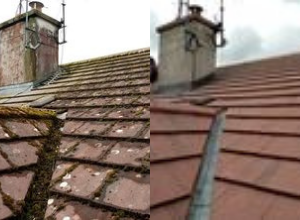
Moss on concrete tiles doesn’t automatically mean they need sealing. Cleaning may be enough if the tiles are in good condition and you simply want the green growth gone.
For faded or patchy colour, roof painting is a separate option to discuss. Before agreeing to it, check that the proposed product suits your tiles and any coating already on them. Sealing shouldn’t be treated as a compulsory step after cleaning.
What about natural slate?
With natural slate, you may not need a sealer at all. It absorbs very little water, so ask what the treatment would actually add before paying for it. A roof looking a bit dull or uneven in colour doesn’t, by itself, mean it needs coating.
Have someone confirm what’s on your roof too. Natural slate and manufactured slates can look much alike from the ground, but they don’t necessarily need the same care.
A product sold as slate roof paint won’t automatically suit your roof. Ask the contractor why they recommend it, whether it’s compatible with your slates and what upkeep it would need. Cleaning or replacing a few damaged slates may be all that’s needed.
Start by explaining what’s bothering you
You don’t need to diagnose the roof yourself. A few observations can help the person inspecting it understand your concerns.
From a safe position on the ground, take photos of the front and back. Point out the areas you’re unhappy with and mention any repairs or previous painting you know about.
You might say:
- “The back stays green, even when the front looks dry.”
- “There are newer tiles around the chimney that don’t match.”
- “We’ve noticed a damp mark after heavy rain.”
- “We’re painting the house and wondering whether the roof needs anything.”
These lead to different conversations. If you mainly want the moss removed, say so. If you’re hoping to change the colour, make that clear before asking for a quote.
What if there’s a leak?
Have the source checked before spending money on roof sealing.
Tell the roofer where you see the damp mark and when it appears. Does it happen after every shower, or only during heavy rain with strong wind? Has it appeared recently, or has it been coming and going for a while?
A surface treatment won’t put a slipped slate back in place or replace a cracked tile. Repairs need to address the defect itself.
If cleaning or painting is also being discussed, ask who will deal with any repairs and whether that work is included in the quote.
Would cleaning alone be enough?
It may be, particularly if moss and algae are the main things you notice.
Before choosing a finish, ask what you can reasonably expect the roof to look like after cleaning. Newer replacement tiles may still stand out, and ordinary colour variation may remain. A clean roof won’t necessarily look newly tiled.
Our guide to cleaning concrete roof tiles explains that subject in more detail. If treatment for surface growth is being proposed, the biocide roof cleaning guide explains what that part of the work involves.
Ask for a cleaning-only price as well as any proposed coating price. It gives you a clearer idea of what the extra work would cost.
Thinking about roof painting?
If your main concern is colour, discuss it as a separate decision.
A clear roof sealer won’t necessarily hide the difference between older tiles and recent replacements. A coloured coating may change the overall appearance, but suitability comes first.
Ask to see the proposed colour on a sample, ideally outside. Look at it beside your walls, gutters and window frames. A shade that looks right on a small card can feel quite different across a whole roof.
Mention any old paint or coating too. The contractor needs to know what’s already there before recommending another product. Ask what preparation is needed and what upkeep the new finish would involve.
There’s no need to decide on a colour while someone is standing at the door with a quote. Take the time to understand the proposal.
Irish weather matters when planning the work
With the weather we get in Ireland, cleaning and sealing won’t always happen on the same day. The rain may have stopped, but the tiles can still be damp, especially on the shaded side of the house.
The roof sealant needs the right conditions to go on and enough time afterwards before rain arrives. That depends on the product, so no fixed drying time suits every job.
A second visit may be needed rather than trying to fit everything into one dry afternoon. Make sure the quote covers that possibility and that you know how you’ll be kept informed when the weather changes the plan.
What should a roof sealing quote include?
You should be able to read the quote and understand what you’re paying for.
Check whether it covers moss removal, treatment, preparation, the proposed coating and access equipment. Make sure you know which parts of the roof are included, particularly if you have an extension or lower roof.
A few useful questions are:
- What product will you use, and why does it suit these tiles?
- Does the tile manufacturer allow this treatment?
- What happens if you find damage?
- Is a return visit included if the weather delays application?
- What does the guarantee cover?
- Will the finish need further treatment or maintenance?
Ask for the answers in writing. If two quotes differ considerably, compare the work included before comparing the totals.
Talk to Spooners Cleaning About Your Roof
Not sure whether your roof needs cleaning or something more? Tell us what you’ve noticed and send a few photos taken from the ground.
Our Roof Cleaning Package includes an inspection, moss removal and soft washing. We check for visible issues and assess the cleaning needed before starting work.
If you’re also considering sealing or painting, mention it when you enquire. Our Kildare roof cleaning page lists those services, and we can discuss whether either is appropriate for your roof and what would be included in a quotation.
Frequently Asked Questions
Does roof sealing stop leaks?
A surface sealer won’t repair broken tiles, slipped slates or defective flashing. Have a roofer find the cause of the leak before considering a coating.
Can you paint natural slate?
Don’t assume natural slate needs painting. Before using slate roof paint, confirm the material and get advice on whether the product is suitable and whether there is a reason to apply it.
Does a roof need cleaning before sealing?
The surface needs the preparation specified for the chosen product. That generally includes removing contamination and allowing suitable drying time. The cleaning method must also suit the roof covering.
Will moss grow back after roof sealing?
It can. Don’t treat sealing as a promise that the roof will stay moss-free. Ask what follow-up care is recommended and whether cleaning and treatment alone would address your concern.
How long does a roof sealant last?
There isn’t one lifespan that applies to every product and roof. Ask for the manufacturer’s guidance, the contractor’s expectations for your roof and the written guarantee. Check whether it covers the product, application or both.