With Christmas just around the corner, now’s a good time to give your outdoor areas a little attention, especially if you’re expecting family or friends over the holidays.
Patios, pathways and decking can become slippery during the colder, wetter months as moss, algae and dirt build up. A good clean can make a noticeable difference, helping to freshen up your outdoor space while making frequently used areas less slippery.
Whether you’re thinking about patio power washing patio or cleaning your decking, it’s important to choose the right method for the surface. Here’s what to consider before getting started
Why does that same corner keep turning green?
Ever notice how certain parts of your patio or driveway seem to turn green no matter how often you clean them?
It’s usually the spots that don’t get much sunlight, like the area behind your plant pots, along a garden wall or in a corner that stays damp after it rains.
Over time, dirt, leaves and moisture build up, making it easier for moss and algae to grow. And before you know it, that freshly cleaned patio is starting to look green again!
Regular sweeping and clearing away leaves can help, but if water keeps collecting in the same spot, the problem will likely return.
It’s also worth checking for loose paving slabs, damaged joints or areas where water isn’t draining properly. Getting these sorted can make a big difference in keeping your outdoor surfaces cleaner for longer.
Choosing the Right Cleaner for Your Patio or Decking
Not all patios and decking are made from the same materials, so the cleaning product that works well on one surface might not be suitable for another.
For example, a cleaner designed for concrete paving might not be suitable for natural stone or timber decking. Some products can also affect existing sealers, stains or protective finishes.
Before buying a cleaner, it’s worth checking what your patio or decking is made from and whether the product is recommended for that material.
| Surface | What to check before cleaning | Main mistake to avoid |
| Concrete | Its condition and any decorative finish or sealer. | Using enough pressure to mark or strip the surface. |
| Indian sandstone | Guidance for that stone and its existing treatment. | Assuming all natural-stone cleaners are interchangeable. |
| Limestone | That the product is specifically suitable for limestone. | Using acid cleaners on acid-sensitive stone. |
| Porcelain paving | Instructions for the tiles and grout or jointing system. | Damaging the joints while concentrating on the tiles. |
| Timber decking | The boards, fixings and any paint, stain or oil. | Roughening the fibres or stripping the finish. |
| Composite decking | The brand and exact product range. | Borrowing pressure settings from a different product. |
Even if a cleaner says it’s suitable for your surface, it’s worth testing it on a small, less noticeable area first. Let it dry completely so you can check for any changes in colour or texture.
How to clean patio slabs without overdoing it
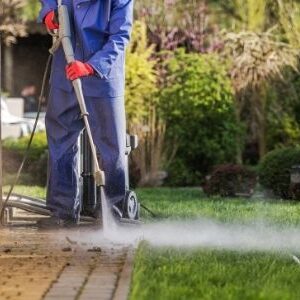
Cleaning your patio might seem straightforward, but not every type of paving needs the same treatment. For everyday dirt and lighter stains, a good sweep and a suitable patio cleaner may be all you need. For more stubborn build-up, power washing can be effective, provided it’s suitable for the paving.
Before getting started, here are a few things to keep in mind:
- Clear the area. Move garden furniture, plant pots and anything else that might get in the way.
- Check the condition of your paving. Look out for loose slabs, damaged joints or areas where water tends to collect.
- Use the right cleaning method. Different paving materials need different levels of care, so check the manufacturer’s recommendations before using a pressure washer or cleaning product.
- Pick a suitable day. Avoid cleaning when frost is expected or when the weather won’t allow enough time for the surface to dry.
- Protect your garden. Keep nearby plants and drains in mind, and follow the product instructions for safe use and disposal of cleaning water.
One common mistake is assuming that more pressure means a better clean. In reality, excessive pressure can damage the paving surface or loosen the material between slabs.
If your patio needs a more thorough clean, professional power washing can help remove stubborn dirt and restore its appearance without unnecessary damage when the right method is used.
At Spooner’s, we offer professional concrete patio cleaning for patios, paving and outdoor seating areas. Whether you’re preparing your garden for visitors or simply giving it a seasonal tidy-up, we’re happy to help you find the right approach for your patio.
How to Clean Decking Without Damaging It
Timber and composite decking might look similar, but they need different types of care when it comes to cleaning.
For timber decking, a soft brush and a suitable decking cleaner can often help remove dirt and algae without damaging the wood. Before cleaning, check for loose boards, signs of rot or any damaged areas that might need repairing.
Pressure washing can work on some timber decking, but too much pressure can damage the wood fibres and leave the surface rough.
Composite decking is generally easier to maintain, but that doesn’t mean every cleaning method is suitable. Different manufacturers have their own recommendations, so it’s worth checking what’s safe for your particular boards.
If you’re unsure where to start, Spooner’s offers timber and composite deck cleaning to help keep your decking clean and well maintained.
Not every stubborn stain needs more pressure
Ever tried cleaning your patio only to find that some dark spots just won’t budge?
Not every stain is the same. Green algae and moss can often be removed with regular cleaning, but darker patches caused by lichen, fallen leaves or other staining may need a different approach.
It’s tempting to increase the pressure when a stain won’t come off, but that can sometimes damage the paving or loosen the joints. Some marks simply need a different cleaning treatment, while others might not disappear completely.
After cleaning, it’s also worth checking the joints between your paving slabs. Depending on the type of paving, any lost jointing sand may need replacing.
And what about sealing? It’s not always necessary. Depending on your patio material and the weather, it may be better to leave that job until conditions improve.
Patio and decking cleaning with Spooner’s
At Spooner’s Cleaning, we help homeowners across Tipperary, Laois, Kildare and Limerick keep their patios, decking, pathways and driveways looking their best.
Every outdoor space is a little different. You might have a concrete patio, timber decking or a combination of surfaces that need different types of care.
That’s why we take the time to look at what needs cleaning and choose a suitable approach for each surface.
Whether you’re preparing your outdoor areas for Christmas visitors or simply want to give them a good clean, our power washing services can help.
Just let us know what areas you’d like cleaned, and we’ll be happy to discuss the options.
Don’t leave your outdoor cleaning until the last minute
If you’re planning to have family or friends over for Christmas, it’s worth getting your outdoor cleaning sorted a little earlier rather than leaving everything until the day before.
Winter weather in Ireland can be unpredictable, and with shorter days and colder temperatures, patios, pathways and decking can take longer to dry after cleaning.
It’s also important to keep an eye on the temperature. If frost or freezing conditions are expected, it’s best to put off power washing until the weather improves.
Once everything is cleaned, a little regular maintenance can help keep things looking tidy. Sweep away fallen leaves, keep your drains clear and make sure outdoor steps and pathways are well lit.
And if you’re looking for more ways to look after your outdoor spaces during the colder months, have a read of our guide to winter driveway maintenance.
Frequently asked questions
Can you power wash a patio in winter?
Yes, where the paving allows it and the weather is suitable. Postpone if water could freeze, and allow for product weather restrictions and slower drying in shaded areas.
Can I pressure wash timber or composite decking?
Some products allow it, but others don’t. Check the guidance for your boards and finish first. Damaged or deteriorated decking needs assessment before cleaning.
What is the best patio cleaner for green algae?
Choose one labelled for algae removal and suitable for your paving, joints and any sealer. The best patio cleaner for concrete may be unsuitable for limestone or decking.
Will my patio need re-sanding afterwards?
Only where the paving system uses jointing sand and needs replenishing. Mortar, grout and specialist jointing systems have different maintenance requirements.
Planning a clean-up before Christmas?
If you’re hoping to get your patio, decking or outdoor areas cleaned up before Christmas, we’d be happy to help!
Just send us a few photos of the areas you’d like cleaned and let us know where you’re based.
We provide power washing services across Tipperary, Laois, Kildare and Limerick.
Get in touch, and we’ll see what we can arrange before Christmas, depending on the weather and availability.